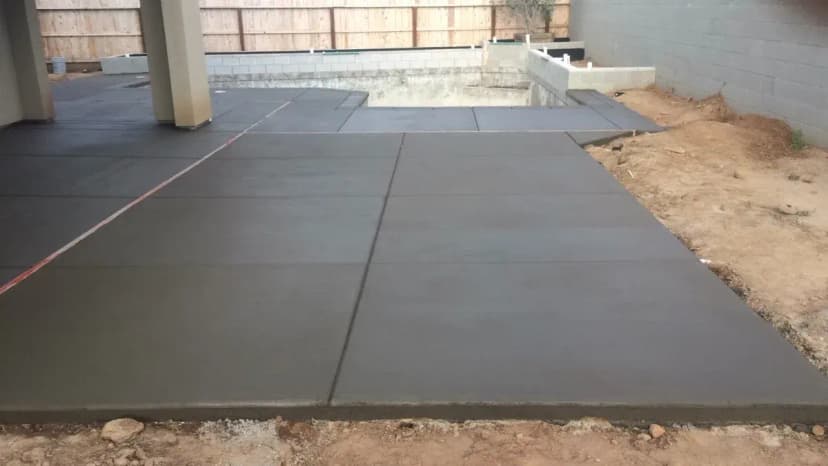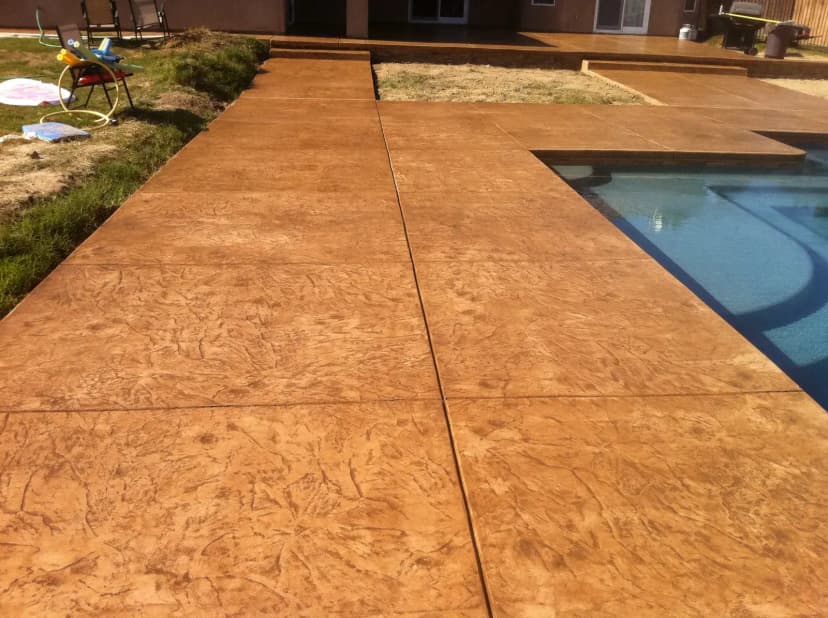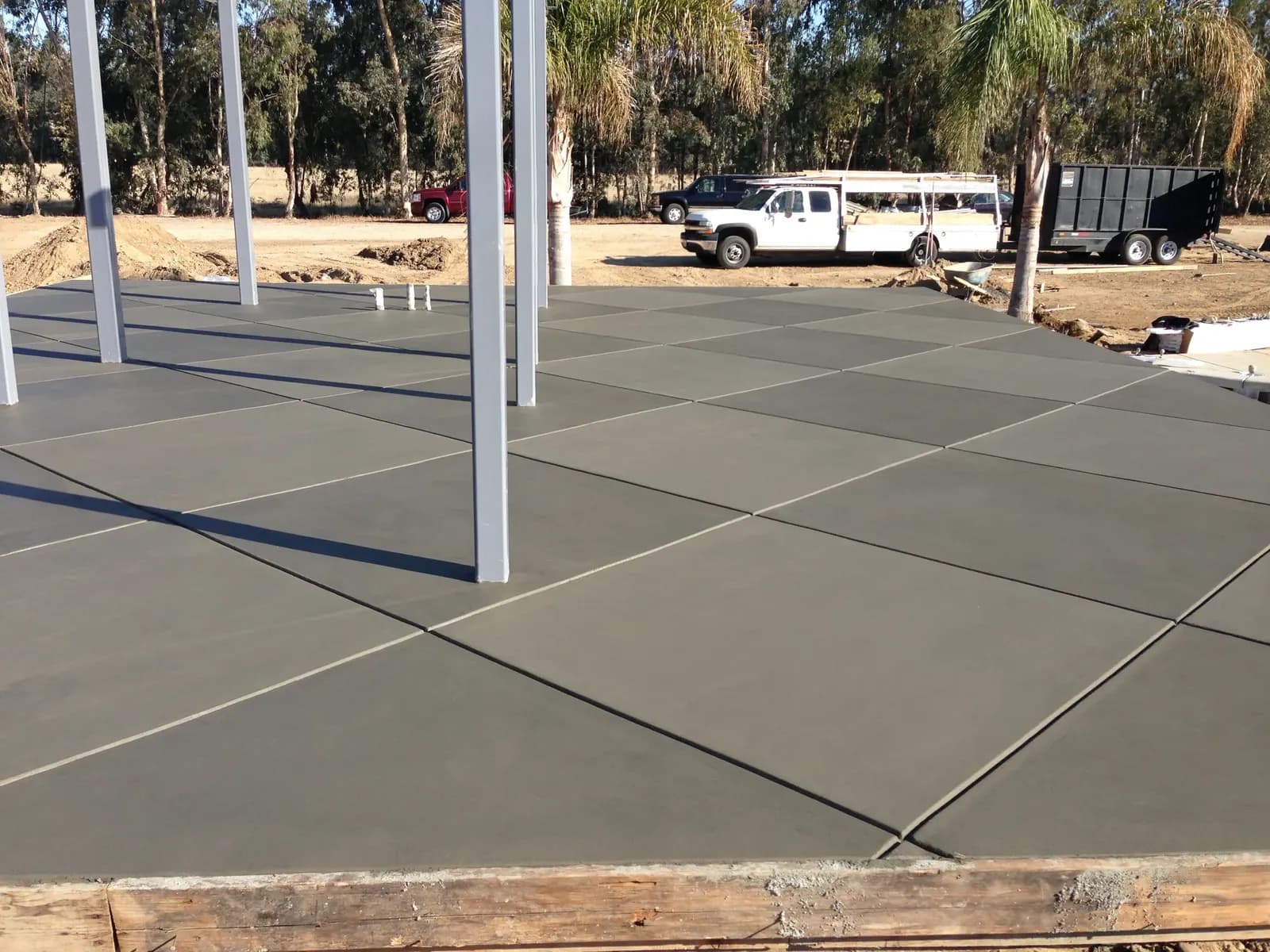
Kerman is a straight run west from our Clovis yard, and we design and build the whole backyard there: patio covers, pavers, retaining walls, fire pits, outdoor kitchens, artificial turf, landscaping and the concrete that holds all of it together. Kerman parcels tend to run generous by valley standards, which usually leaves room to do something real with the back half of the property instead of squeezing a slab against the house and calling the project finished.
The concrete underneath is the part we never hand to anyone else. The Salas family has been pouring valley concrete since April 1980, so that is 46 years of pouring flatwork across Fresno County, and we still pour our own, compacted, reinforced and jointed so it stays flat. Our Google rating is 5.0 across 29 reviews.
What Kerman yards have that a Fresno yard does not
The first thing you notice coming into town on Whitesbridge Avenue is how much room people have. Lots here run wider and deeper than almost anything inside the Fresno city limits, the ground is dead flat, and plenty of the older homes near Kerckhoff Park sit on parcels with a detached garage, a shop, a few trees and a back half nobody has ever touched. That is an opportunity and a problem at the same time. Space is what makes a genuine outdoor living project possible, and it is also why a small slab off the back door ends up looking lost.
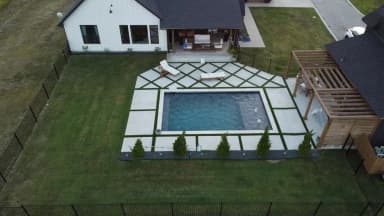
So we plan Kerman yards in zones rather than as one big rectangle of concrete. A covered dining area near the house where the kitchen door already is, a walkway out to whatever sits at the back of the property, a turf area that stays green without a summer water bill, and a fire pit or a seat wall at the far end so there is a reason to walk out there after dinner. On the newer streets, where the builder handed over bare dirt and a five foot slab, the job is usually the reverse: get every square foot of a smaller yard doing something useful.
- Older parcels near the center of town with room for a shop pad, an RV pad and a full backyard build
- Newer subdivision lots that came with bare dirt and a starter slab
- Wide street frontages that make a driveway replacement or a second parking apron worth doing at the same time
- Mature trees that have lifted the original walkways and need a root barrier, not just fresh concrete
Setting the fall before anything is poured
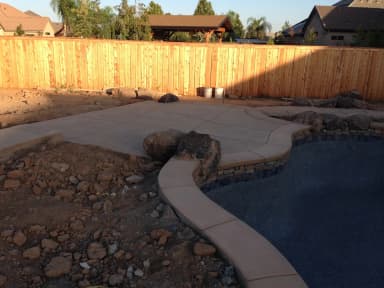
Flat ground is easy to build on and unforgiving about water. Kerman sits on level valley floor, so a patio or a pool deck will hold a puddle for days if the slope was never planned. We set the fall first, during the walk, before a single form goes in. Grade away from the house and away from the pool, a consistent drop across the whole surface, and a defined place for the water to end up, whether that is the side yard, a planting bed or a line run out toward the street.
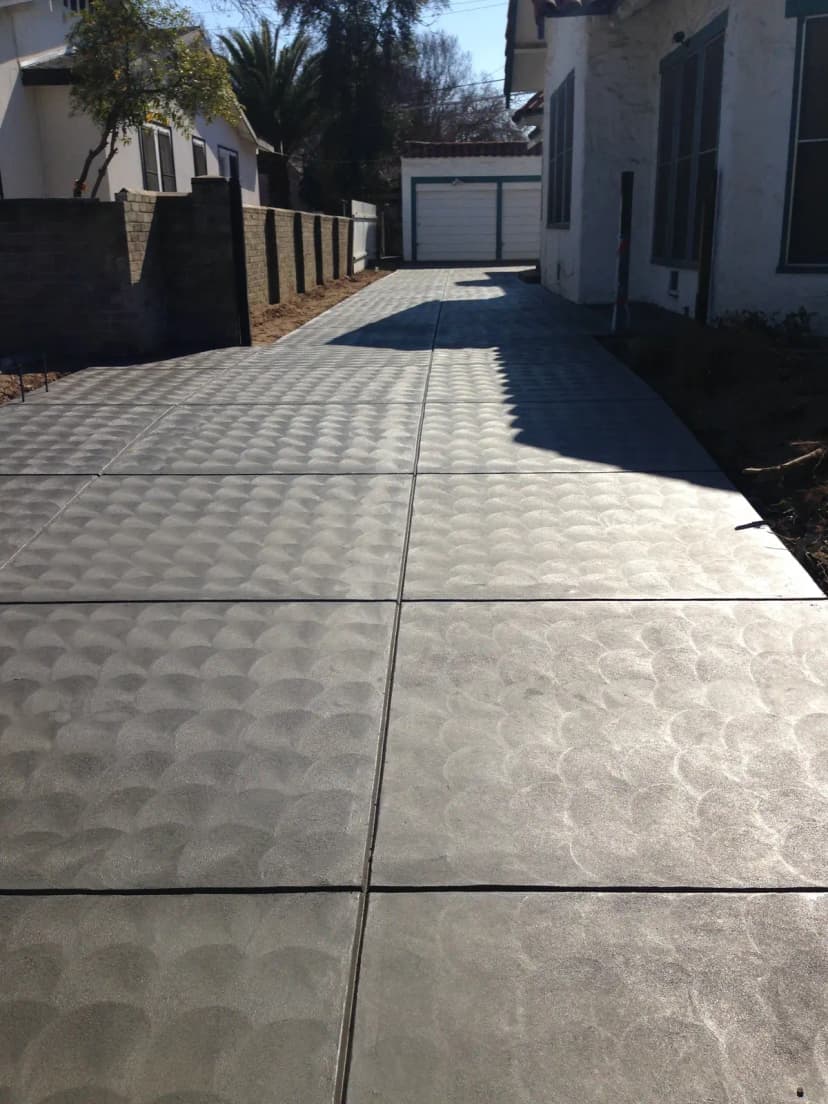
Then the joints. Control joints get cut where the slab wants to move anyway, at re-entrant corners, at post locations, on a spacing that suits how thick the pour is, so the crack concrete eventually makes happens in a straight line you chose. Expansion material goes in where the new work meets the house, an existing driveway or a pool shell. Deck drains and channel drains go where grade alone cannot carry the water, which on a flat lot with a fence line close to the slab is more often than most homeowners expect.
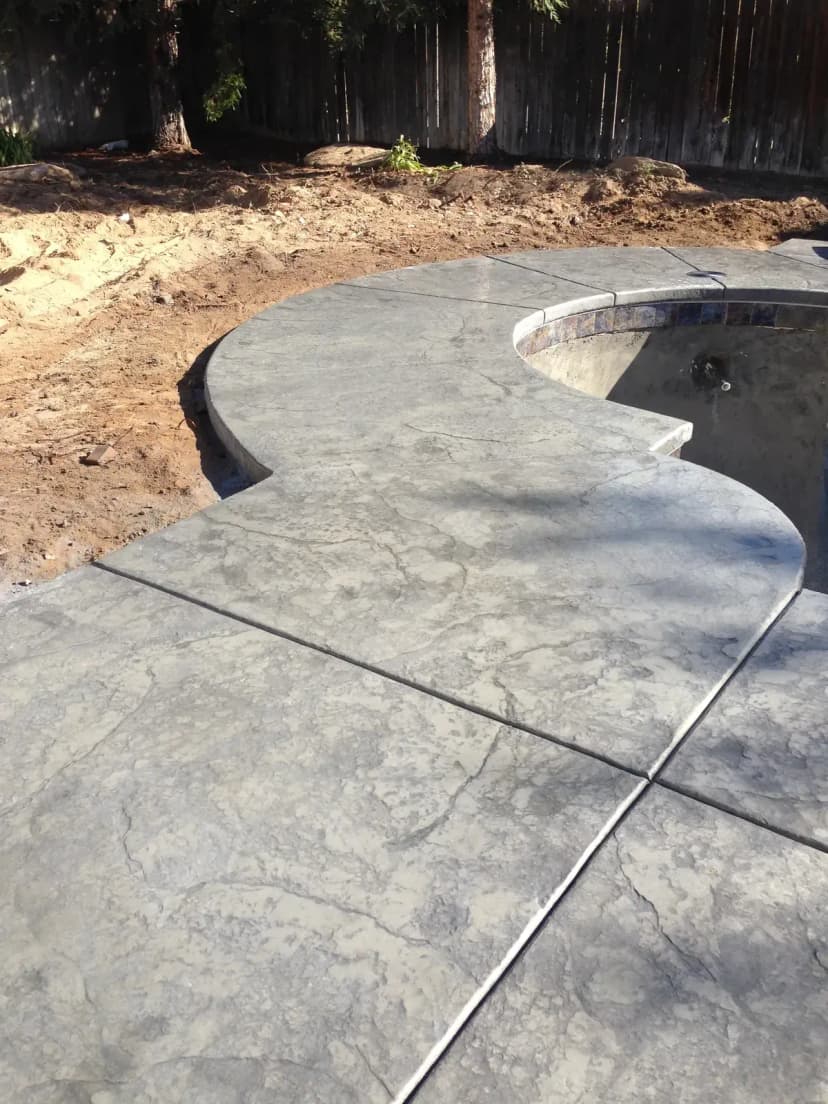
When the pour is finished we check it for standing water instead of assuming. A hose over new concrete tells you in five minutes what a wet February would tell you in five months, and anything that pools gets sorted out before we go. That is standard here, not a favor, and it is why we would rather spend an extra half hour on grade stakes than have a conversation about a birdbath later. The same discipline applies to concrete poured around an existing pool, where the coping height and the skimmer already fix the elevations we have to work to.
- Slope set and checked before the forms go in, never corrected afterwards
- Control joints cut on a spacing that matches the slab thickness and the shape of the pour
- Expansion joints where new concrete meets the house, an old driveway or a pool shell
- Deck drains and channel drains where a flat lot cannot shed water by grade alone
- The finished surface wetted and checked for standing water before we call it done
Shade, turf and the parts of the yard that are not concrete
Shade is the first upgrade that changes whether a Kerman backyard gets used. There is very little natural cover on the west side, and a patio with no roof over it is unusable from June through September. We build attached and freestanding covers, Alumawood and powder coated aluminum systems, custom wood beam and rafter structures, and pergolas that filter light rather than block it, all pre wired for fans, lights and heaters so the space works after sunset too.
From there it is whatever the yard is actually for. Artificial turf takes the watering and the mowing out of a large lot and stays green through a summer of restrictions, with the base built to drain rather than to hold. Pavers and banding give a patio edge some shape. Retaining and seat walls define a fire pit area. Outdoor kitchens and BBQ islands get the gas, water and power runs coordinated as part of the same build instead of being chased afterwards by three separate trades.
- Attached and freestanding patio covers, Alumawood, aluminum and custom wood
- Pergolas, arbors and louvered shade structures tied into the patio
- Pet and kid rated artificial turf, putting greens and play areas with a base that drains
- Fire pits, fire tables and outdoor fireplaces with seat walls built around them
- Built-in BBQ islands, bar tops and storage, finished to match the house
Wind, farm dust, hardpan and the Fresno County permit side
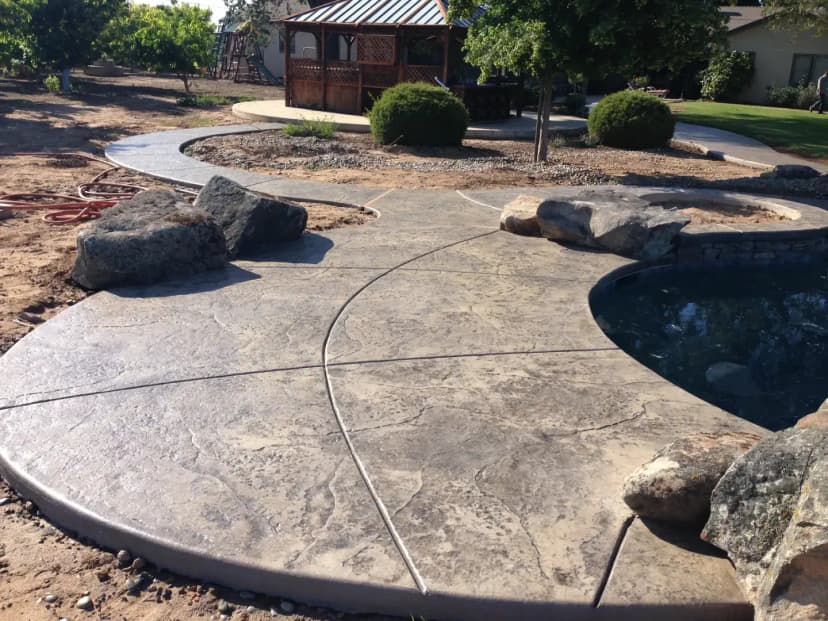
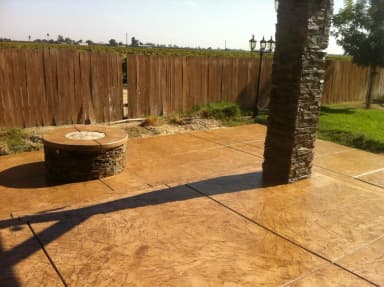
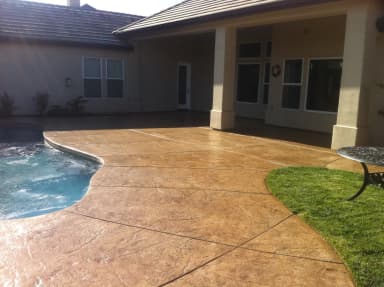
Kerman is surrounded by working farm ground, and that shapes what holds up. Wind comes across open fields with nothing to slow it, and the dust that rides with it settles on everything, so a very smooth or very dark finish shows every bit of it and needs constant sweeping. A broom finish, an exposed aggregate wash or a mid tone color hides the reality of living next to row crops and orchards, stays slip resistant when it is wet, and stays cooler underfoot than a dark slab does at 105 degrees. Freestanding covers get their posts engineered for the wind exposure, not just set on the surface.
Underneath, it is valley hardpan, which is dense and unforgiving and has to be prepared properly rather than fought. We compact the base, deal with tree roots and any old concrete before forms go in, and reinforce for the loads the slab will actually carry, which on a Kerman lot often includes an RV or a work truck. In midsummer we watch the pour window, because concrete placed in the worst heat of an afternoon finishes badly. Work inside the city limits goes through the City of Kerman, and anything out on county ground goes through Fresno County, and we handle the permit and inspection side as part of the job.
What hiring Salas Outdoor in Kerman is like
We run the estimate on site. We come out, walk the yard with you, talk through layout, finishes and what the space is going to be used for, then put one clear written price in front of you. We strive to make that visit happen the same day you call, or within 24 hours if it is not a weekend, and the estimate is free every time. Nothing shows up on the final invoice that was not on the estimate, and when a job uses less footage than the allowance we quoted, the difference goes back to you. Homeowners write reviews about that specifically.
On the build, most single element pours finish in a day. One 380 square foot job was done in under nine hours. The crew clears the debris before it leaves, which is the single most repeated line in our reviews: one customer wrote that nobody would have known their house had been a construction zone for two days. Then the concrete gets the time it needs to cure properly, and we stay reachable afterwards. A lot of our Kerman and Fresno County work is the second or third phase for somebody we poured for years earlier.
Kerman questions, answered
What we build in Kerman, how quickly we get there, and what it costs to find out.
Do you really come out to Kerman, or do you mostly stay in Fresno and Clovis?
We come out. Kerman is a straight run west on Highway 180 from the Clovis yard and it is well inside the area we work every week. We usually get out for the walk and the estimate the same day you call, or within 24 hours if it is not a weekend. There is no travel charge for a Kerman address and no minimum job size we quietly apply out here.
Can you build me a new pool in Kerman?
No, and we would rather tell you straight. What we do here is everything around the water: new pool decks, pool deck resurfacing, coping, drainage, crack and section repair, and concrete worked in around existing skimmers and equipment.
The dust out here gets on everything. Which concrete finish copes best?
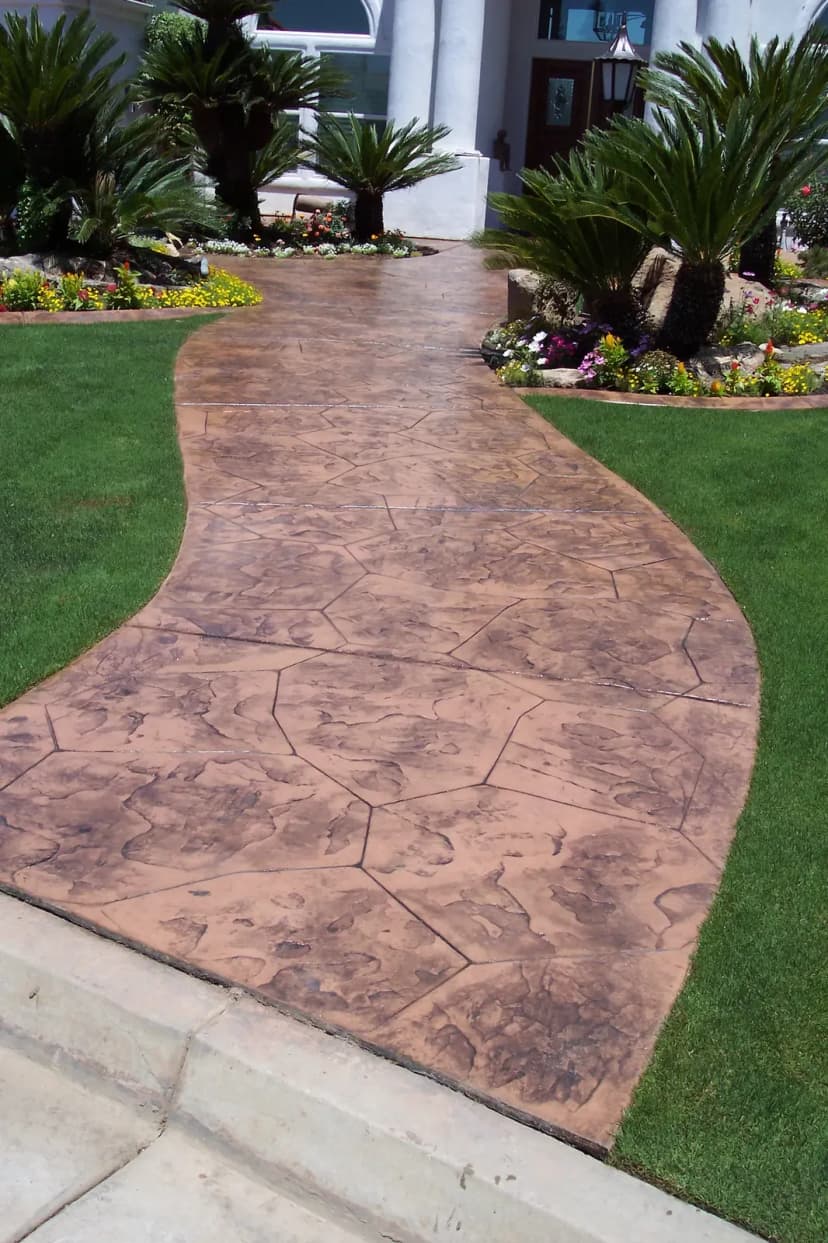
A broom finish or an exposed aggregate wash, in a mid tone rather than a very dark color. Both have enough texture that farm dust reads as texture instead of as a dirty slab, both stay slip resistant when wet, and neither bakes the way a dark smooth surface does in July. Stamped and decorative finishes still work well in Kerman, we just steer the color choice toward something that lives comfortably next to open fields.