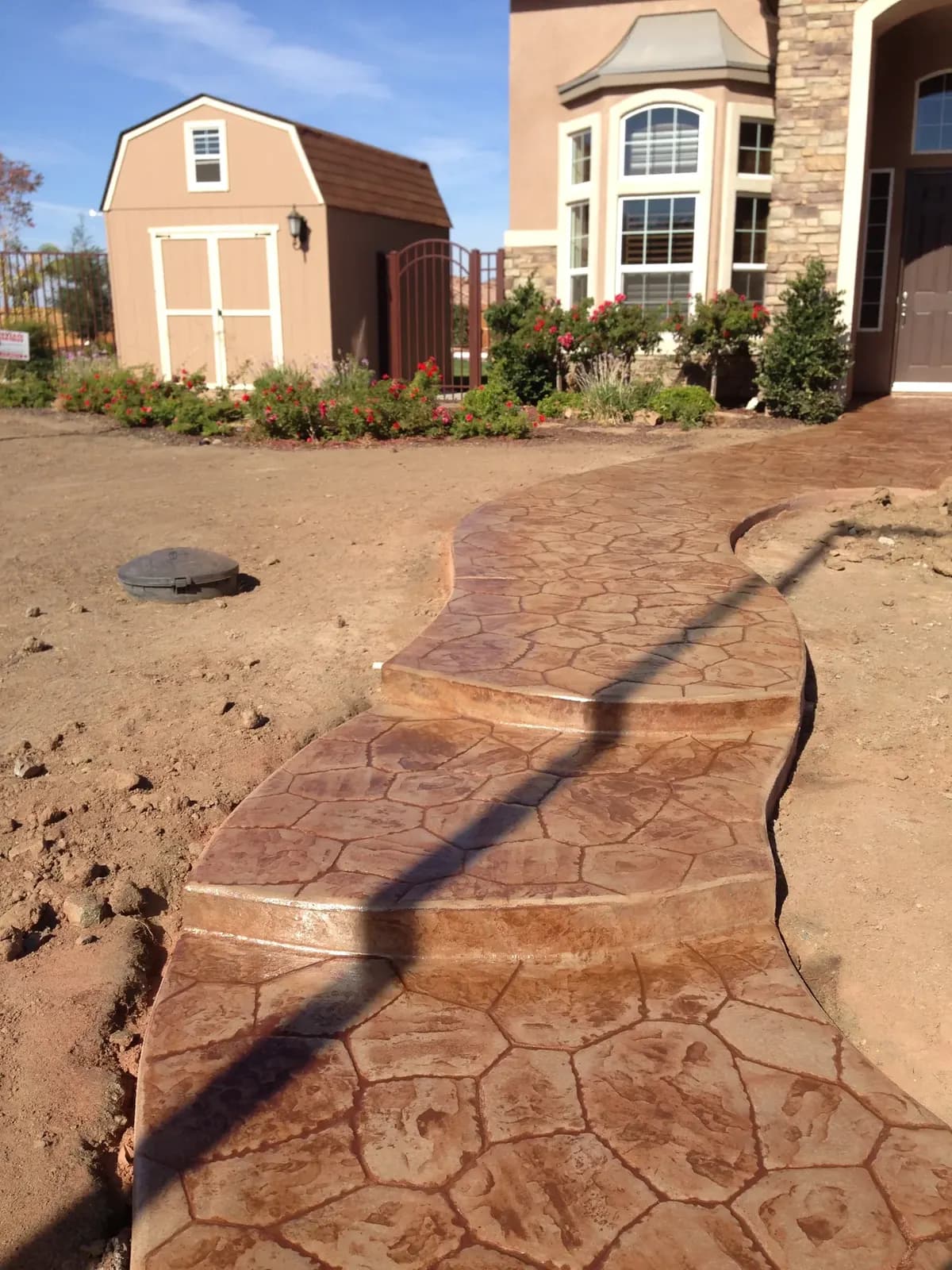
What a backyard remodel costs in Fresno
As of 2026, a backyard remodel in Fresno or Clovis generally lands in one of three bands: about $18,000 to $35,000 for a focused project, about $40,000 to $85,000 for a full outdoor living space, and about $100,000 to $250,000 for a top to bottom build with a kitchen, structures and significant hardscape. A blank tract lot in a newer Clovis or Madera subdivision usually costs more than an older Fresno yard, because nothing is there yet and everything has to be built.
Nobody can quote a backyard from a web page, and we will not pretend otherwise. What those bands are useful for is deciding whether to walk your yard with a $30,000 conversation or a $120,000 one. The written estimate is free, The owner walks the yard with you himself, and we aim to make that visit happen the same day, or within 24 hours if it is not a weekend. Bring photos, a rough wish list and the number you are comfortable with, and we will tell you honestly what that number builds.
- Focused project, roughly $18,000 to $35,000: patio, shade and turf
- Full outdoor living space, roughly $40,000 to $85,000: patio, cover, kitchen, fire feature, turf and lighting
- Complete build, roughly $100,000 to $250,000: all of the above plus walls, structures, planting and a pool deck
- Design and layout work is part of the free estimate, not a separate fee
As of 2026, a backyard remodel in Fresno or Clovis generally lands in one of three bands: about $18,000 to $35,000 for a focused project, about $40,000 to $85,000 for a full outdoor living space, and about $100,000 to $250,000 for a top to bottom build with a kitchen, structures and significant hardscape. A blank tract lot in a newer Clovis or Madera subdivision usually costs more than an older Fresno yard, because nothing is there yet and everything has to be built.
The three tiers, and what each one actually gets you
The focused tier is where most valley families start, and it is not a compromise. A 500 square foot broom finish patio with a clean saw cut pattern, an Alumawood cover over the part that bakes in the afternoon, and a run of pet rated turf where the lawn used to be gets a yard from unusable to used, and it fits inside $18,000 to $35,000 on a lot with decent access.
The middle tier is the one people picture when they say backyard remodel. Add a built in barbecue island with a bar top, a gas fire pit with a seat wall around it, low voltage lighting, a paver band or an exposed aggregate border, and a bigger covered area. That is the $40,000 to $85,000 conversation. It is the tier where the yard stops being a patio with furniture on it and starts being a room you go out to, and it is where most Clovis and Madera families land once they have priced the pieces individually.
The top tier is a yard rebuilt from the dirt up: retaining or seat walls, a California room or a substantial custom cover, a full outdoor kitchen, planting and irrigation, a putting green, and a new pool deck around an existing pool. Big numbers, but it is one contract and one crew rather than five trades you are managing yourself. Yards at this level are usually built across one long season, and the design work that makes the pieces fit together is part of the free estimate rather than a separate fee.
What each element costs on its own
It is easier to build a budget from parts than from a total. These are honest 2026 ranges for the valley, installed, and every one of them moves with size, access and finish. Concrete is the item most people underestimate and the one that everything else sits on, which is why we pour our own rather than subcontracting it. Take the ranges below, add up the pieces you actually want, and you will be within striking distance of a real budget before anyone comes out.
Note that a number of these overlap. A fire pit inside a seat wall shares the wall cost. A barbecue island on an existing slab is cheaper than one that needs the patio extended first. That overlap is exactly why sequencing matters, and why a single estimate for the whole yard usually comes in under the sum of five separate ones. It is also why we would rather price the whole yard once, even when you intend to build it in three stages, than quote you three unrelated projects.
- Concrete patio: about $9 to $14 per square foot broom, $16 to $24 stamped
- Paver patio or surround: about $16 to $26 per square foot
- Artificial turf: about $10 to $16 per square foot installed over a proper base
- Alumawood or aluminum patio cover: about $35 to $60 per square foot
- Custom wood cover or pergola: about $50 to $90 per square foot
- Built in barbecue island: about $7,000 to $25,000 depending on size and finish
- Gas fire pit: about $3,500 to $9,000. Outdoor fireplace: about $9,000 to $25,000
- Block retaining or seat wall: about $45 to $95 per linear foot depending on height
- Low voltage landscape lighting: about $2,500 to $7,000 for a typical yard
Access, demolition and the things nobody budgets for
The single biggest swing factor on a backyard number is how the yard is reached. A wide side gate and a driveway a mixer can back down is the cheap version of your project. A three foot gate, a slope, or a finished front walkway that has to be protected means material moves by buggy or gets pumped over the house, and that is real money on a large pour. Tight lot subdivisions around Clovis, Friant and Tesoro Viejo run into this constantly.
Demolition is the other one. Old patio slabs, a dead lawn and irrigation, a failing planter wall, tree roots that have been lifting things for fifteen years: all of it comes out before anything new goes in, at roughly $3 to $6 per square foot for concrete removal plus haul off for the rest. Utilities are the third. Gas to a barbecue island, water to a sink, a circuit for the fans and lights on a cover, and a drain line for the new hardscape all have to be run while the yard is open. Doing them later means cutting your new concrete, and nobody wants that.
Want your yard priced?
Free estimate, we walk it with you.
Phasing a backyard over two or three years
Most yards we build are phased, and that is a sensible way to do it as long as the phases are planned together. The rule is simple: anything that has to go under or through the concrete goes in during phase one, even if the thing it feeds is two years away. Gas stubs, conduit, water lines and drain runs are cheap in an open trench and expensive through a finished slab.
So a typical three phase plan looks like this. Phase one is grading, drainage, utility runs and the concrete, because it is the foundation of everything and the part that is painful to retrofit. Phase two is shade and structure, the cover or pergola whose posts land on footings we already poured. Phase three is the kitchen, the fire feature, turf and planting. You spread the cost across three budgets without paying twice for anything, and the finished yard looks like it was designed in one go, because it was.
- Phase one: grading, drainage, utility stubs, footings and all concrete
- Phase two: patio cover, pergola or California room on the footings already in place
- Phase three: outdoor kitchen, fire feature, turf, planting and lighting
- Design the whole yard first, even if you build a third of it this year
Designing for a 105 degree summer
A Fresno backyard is unusable for about three hours a day for four months a year unless the design accounts for it, and that is the single most important thing we bring to a walkthrough. The first question is where the sun lands between three and seven in the evening, because that is the hour that decides whether anybody sits outside. A cover sized only to the back door leaves the seating area in full sun exactly when you want to be in it.
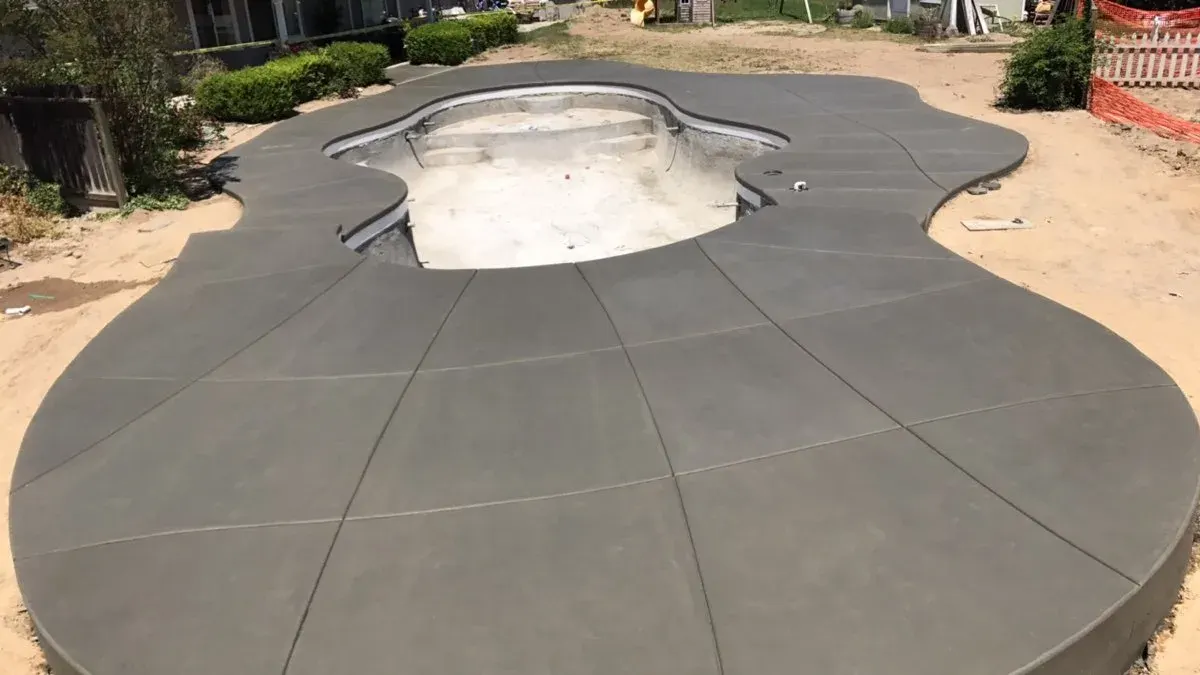
Surface choice matters just as much. A dark stamped patio absorbs heat and holds it long after the sun moves off. A light broom finish or an exposed aggregate deck stays meaningfully cooler underfoot, which is why we push those finishes hard in barefoot zones around a pool or a spa. Turf gets hot too, and a putting green in full afternoon sun is a different experience from one with a tree or a structure over it. Water and shade before decoration is the order that makes a valley yard work.
One company, one contract, and what that saves
Most outdoor living companies in this market subcontract their flatwork, and most landscape companies subcontract everything hard. That means your patio, your cover, your kitchen and your turf come from four businesses with four schedules, and when the concrete is a week late every trade behind it slides. It is also how you end up with a cover whose post footings were never poured where the structure needed them. By the time anybody notices that, the concrete is cured and the fix is expensive.
Salas Outdoor is a backyard remodeling company that owns its concrete crew. The family has been pouring valley concrete since April 1980, so the flatwork, the footings, the walls, the pavers, the turf, the shade, the fire and the kitchen come from one company on one schedule. There is one number to call when something needs to move, and one crew that cleans the site before it leaves, which is the line that shows up in our Google reviews more than any other.
How the estimate works
Send the form and tell us roughly what you want out of the yard. The owner comes out, usually the same day or within 24 hours if it is not a weekend, walks it with you, and talks through layout, sun, drainage and finishes standing in the space rather than over a catalogue. You get one clear written price, so you know what the whole yard costs before you commit to anything.
Whatever you call it, the slab is the part of your backyard that everything else depends on. We are at 5.0 from 29 Google reviews, family owned since 1980, and when a job uses less footage than the allowance we quoted, the difference goes back to you. Send the form for a free written estimate.
Questions we get about this
The follow ups this subject raises once somebody starts pricing it for real.
What is a realistic budget for a backyard remodel in Clovis?
For a new tract lot with nothing in it, $40,000 to $85,000 buys a genuinely finished outdoor living space in 2026: patio, cover, turf, lighting and a fire feature or a small kitchen. Under $35,000 gets a focused version of that done well. Above $100,000 you are into walls, structures, a full kitchen and a pool deck. Access and demolition move all three.
Should I do the whole yard at once or in phases?
Phasing is fine and most of our projects are phased. Design the entire yard first, then build it in stages, and put everything that runs under the concrete into stage one: gas, water, conduit, drain lines and footings. Retrofitting those through a finished slab costs more than installing them early, and it means cutting concrete you just paid for.
Do you do the landscaping and the concrete, or just one?
Both, plus everything between them. We design and build the whole yard: concrete, pavers, retaining and seat walls, patio covers and pergolas, outdoor kitchens, fire features, artificial turf, planting, irrigation and lighting, and the pool deck. Our own crew pours the concrete rather than subcontracting it, which is the part most outdoor living companies hand to somebody else.
Salas Outdoor
Written by the crew that does the work. Family owned since 1980, backyard remodeling and concrete across Fresno, Clovis and the Central Valley.