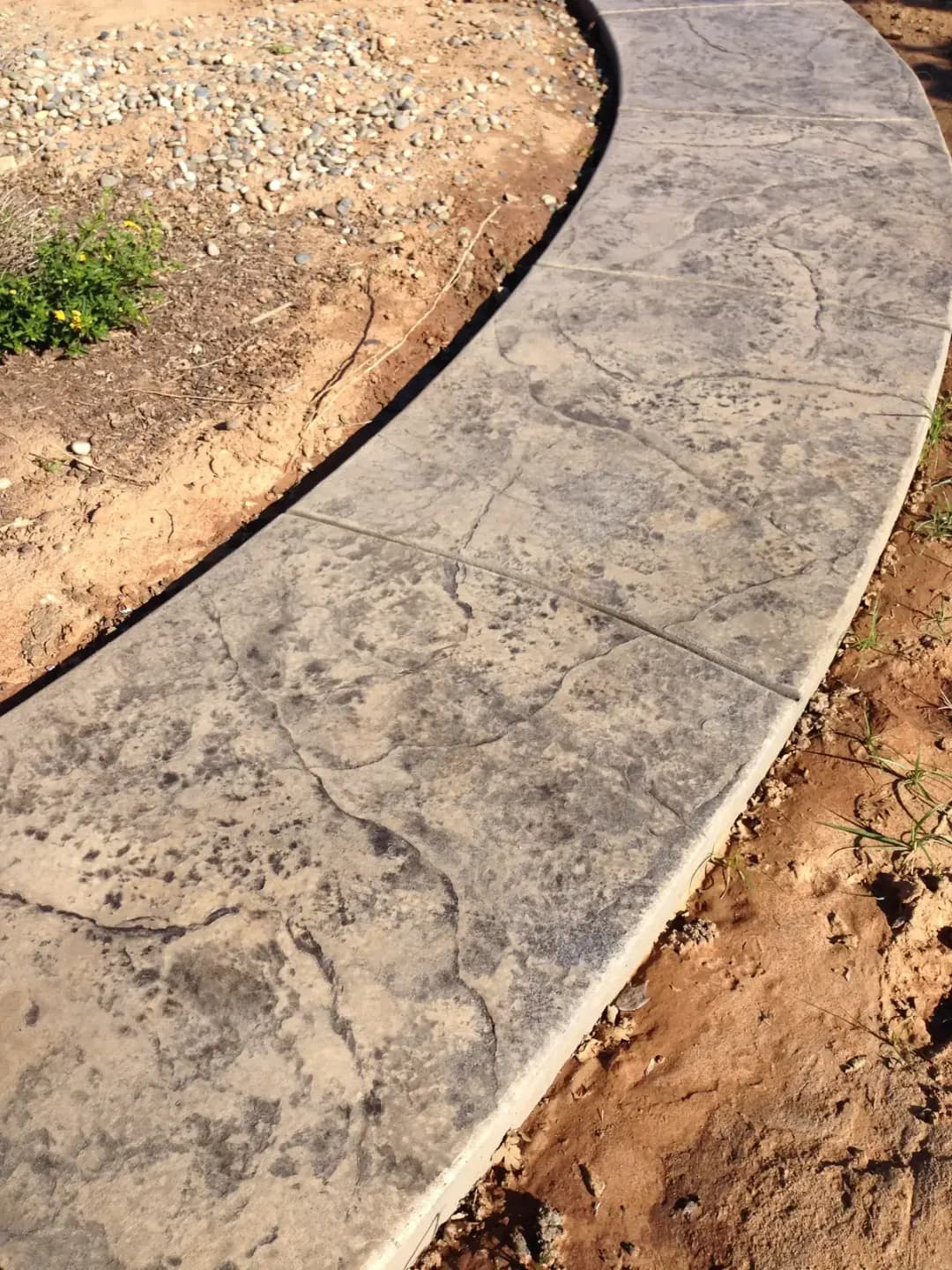
Does stamped concrete get too hot in Fresno?
In a dark color and full afternoon sun, yes, and it is not close. A charcoal or dark earth toned stamped patio in Fresno can climb past 150 degrees at the surface on a 105 degree July day, which is hot enough that nobody crosses it barefoot. In a light tan, sand or bone color, the same stamped patio runs twenty to thirty degrees cooler and is perfectly usable. Same pattern, same crew, same price per square foot, and a completely different summer.
So the honest answer is that stamped concrete is not the problem, the color choice is. Homeowners pick the sample that looks richest on a showroom board in February and then meet it in July. We would rather have that conversation at the estimate, standing in your yard at the time of day the patio actually gets used, than resurface it for you in five years. Stamped concrete is a finish we build and like. It just has to be specified for this climate.
In a dark color and full afternoon sun, yes, and it is not close. A charcoal or dark earth toned stamped patio in Fresno can climb past 150 degrees at the surface on a 105 degree July day, which is hot enough that nobody crosses it barefoot. In a light tan, sand or bone color, the same stamped patio runs twenty to thirty degrees cooler and is perfectly usable. Same pattern, same crew, same price per square foot, and a completely different summer.
What the numbers look like on a July afternoon
Air temperature is the wrong measure. A surface in direct sun absorbs radiant heat all day and holds it, which is why a patio is still warm at nine at night. The variables that decide how hot it gets are color, texture, how reflective the surface is, and how many hours of direct sun it takes. A west facing Clovis or Madera backyard gets the worst of all four, because the slab loads up with heat through the hottest part of the day and has no chance to shed it before evening.
As a rough guide for a Fresno afternoon at 105 degrees: a light natural broom finish is the coolest concrete surface commonly poured here, light colored stamped or decorative work sits a little above it, mid tone earth colors sit noticeably above that, and charcoal and dark slate colors are the hottest. The jump between a mid tone and a dark tone is bigger than the jump between a light and a mid tone, so if you want depth of color, stopping one shade short of the darkest option buys a disproportionate amount of comfort.
- Light natural or bone: coolest, comfortable barefoot most of the day
- Light tan and sand tones: comfortable, and still reads as stone
- Mid tone earth colors: warm, fine in shoes, marginal barefoot
- Charcoal, dark slate and dark brown: too hot barefoot in full sun
Why color does most of the work
A dark surface absorbs more of the sunlight that hits it and converts it to heat, while a light surface reflects more of it away. That is the whole mechanism and it applies to every surface in your yard, not just concrete. It is why a black car interior is unbearable and a white one is not. The same physics runs your patio, your pool deck, your driveway and your roof, and on concrete it is the one variable you get to choose for free at the estimate.
With stamped concrete there are three color layers working at once: the integral color mixed through the concrete, the color hardener that deepens the surface, and the release color that gives the pattern its variation and antiquing. All three affect how hot the finished deck runs, and the release in particular can darken an otherwise light base noticeably. When we talk color at the estimate we are talking about the finished combination, not just the base, and we will show you what that combination actually looks like cured rather than wet.
Texture, sealer and the shine problem
Texture matters more than people credit. A deeply textured stamp with real relief puts less of your foot in contact with the hot surface than a shallow, smooth pattern does, so it feels cooler than the reading suggests. That is the same reason exposed aggregate and broom finish feel comfortable at temperatures where a smooth slab does not. Ask to walk on a sample of the actual stamp pattern rather than judging it from a photograph, because the depth of the relief is nearly impossible to read off a board.
Sealer is the other half. A high gloss sealer looks striking when it goes down and it does two things you should know about: it darkens the color, sometimes considerably, and it makes the surface slicker when wet. On a pool deck or a sloped approach that is a real safety issue, so a slip additive goes into the sealer as standard on anything near water. A matte or satin sealer holds color nearly as well, keeps the surface a shade lighter, and looks better at year three when a gloss coat has started to wear unevenly.
- Deeper stamp relief feels cooler than a shallow smooth pattern
- Gloss sealer darkens the finished color and adds heat
- Matte or satin sealer keeps the color truer and wears more evenly
- Slip additive in the sealer on any surface near water or on a slope
Want your yard priced?
Free estimate, we walk it with you.
Where stamped concrete is the right call anyway
Under a patio cover, in a California room, or on a north facing patio the house shades all afternoon, heat stops being a consideration and stamped concrete is an easy recommendation. Sealer also lasts far longer out of direct sun, so the maintenance interval stretches from two or three years to considerably more. If you are building a covered outdoor living space, this is the finish to use. It is the single most common place we install stamped work around Fresno and Madera, and nobody has ever complained to us about the temperature of a covered floor.
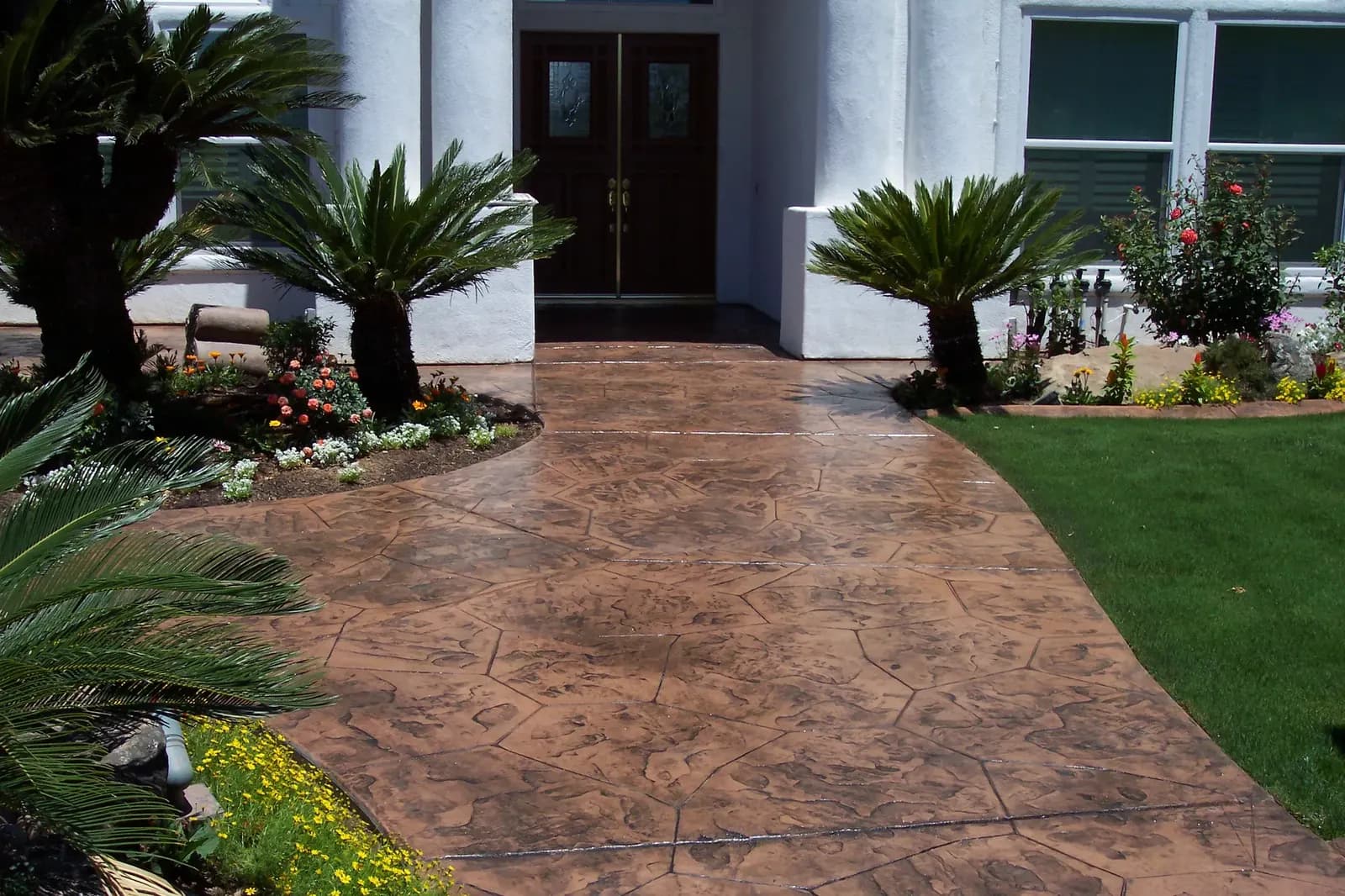
Driveways are usually fine too, because people cross them in shoes. So are front walkways and entry approaches, where the visual impact is worth the most and nobody is barefoot. What we steer people away from is a dark stamped field covering the entire barefoot zone of a pool deck in an open, west facing Clovis or Madera backyard. That is the specific combination that goes wrong, and it is easy to avoid without giving up the look.
- Under a patio cover, or inside a California room
- North facing patios the house shades through the afternoon
- Driveways, front walkways and entry approaches, where people wear shoes
- Borders, bands and inset fields rather than the whole barefoot zone
Cooler options for the barefoot zone
If the walking route from the slider to the water is in full sun, put something light and textured on it. A light broom finish costs the least and grips the best. Light exposed aggregate stays cool, wears superbly and is the finish this valley has used around pools for fifty years. A light textured cool coating over an existing deck runs about $6 to $10 per square foot and is the fastest fix if the concrete underneath is sound.
You do not have to give up the stamped look to do this. The yards that work best split the deck: light broom finish or exposed aggregate through the barefoot zone, and stamped work in the shaded lounge area or as a border, a banding and an inset field where people stand in shoes. It reads as a designed deck rather than a compromise, and it costs less than stamping the whole thing.
How we plan a deck around heat
At the estimate we walk the yard and work out where the sun lands between three and seven in the evening, because that is the hour that decides whether anyone uses the space. Then we pick the finish for each zone, plan the shade, and set the slope, the control joints and the deck drains before anything is poured, so water leaves the deck instead of sitting on it. We check the finished surface for standing water before we call it done and fix whatever we find.
The color conversation is the one worth having carefully, because it is the decision you will feel every July. The owner does the estimate himself, usually the same day you call or within 24 hours if it is not a weekend, and it is free and written. We are family owned, the family trade goes back to April 1980, and the Google rating is 5.0 across 29 reviews. Send the form for a free written estimate.
Questions we get about this
The follow ups this subject raises once somebody starts pricing it for real.
How hot does stamped concrete get in Fresno?
On a 105 degree July afternoon, a dark charcoal stamped surface in full sun can push past 150 degrees, which is too hot to cross barefoot. A light tan or bone colored stamp in the same conditions typically runs twenty to thirty degrees cooler and stays usable. Color is the single biggest factor, followed by texture and how reflective the sealer is.
What color stamped concrete stays coolest?
Light tans, sands, bone and soft grays. Remember that three layers of color combine on a stamped deck: the integral color, any color hardener, and the release that antiques the pattern. A light base with a dark release finishes much warmer than the base alone suggests. Ask to see the full combination cured, not wet, before you commit.
Can I cool down a stamped patio I already have?
Yes. The cheapest answer is shade, because a patio cover over the used part of the deck removes the problem entirely and adds usable hours. Beyond that, a light textured cool coating or overlay over sound concrete runs about $6 to $10 per square foot and changes the surface temperature substantially. Switching from a gloss sealer to a matte one helps a little as well.
Salas Outdoor
Written by the crew that does the work. Family owned since 1980, backyard remodeling and concrete across Fresno, Clovis and the Central Valley.