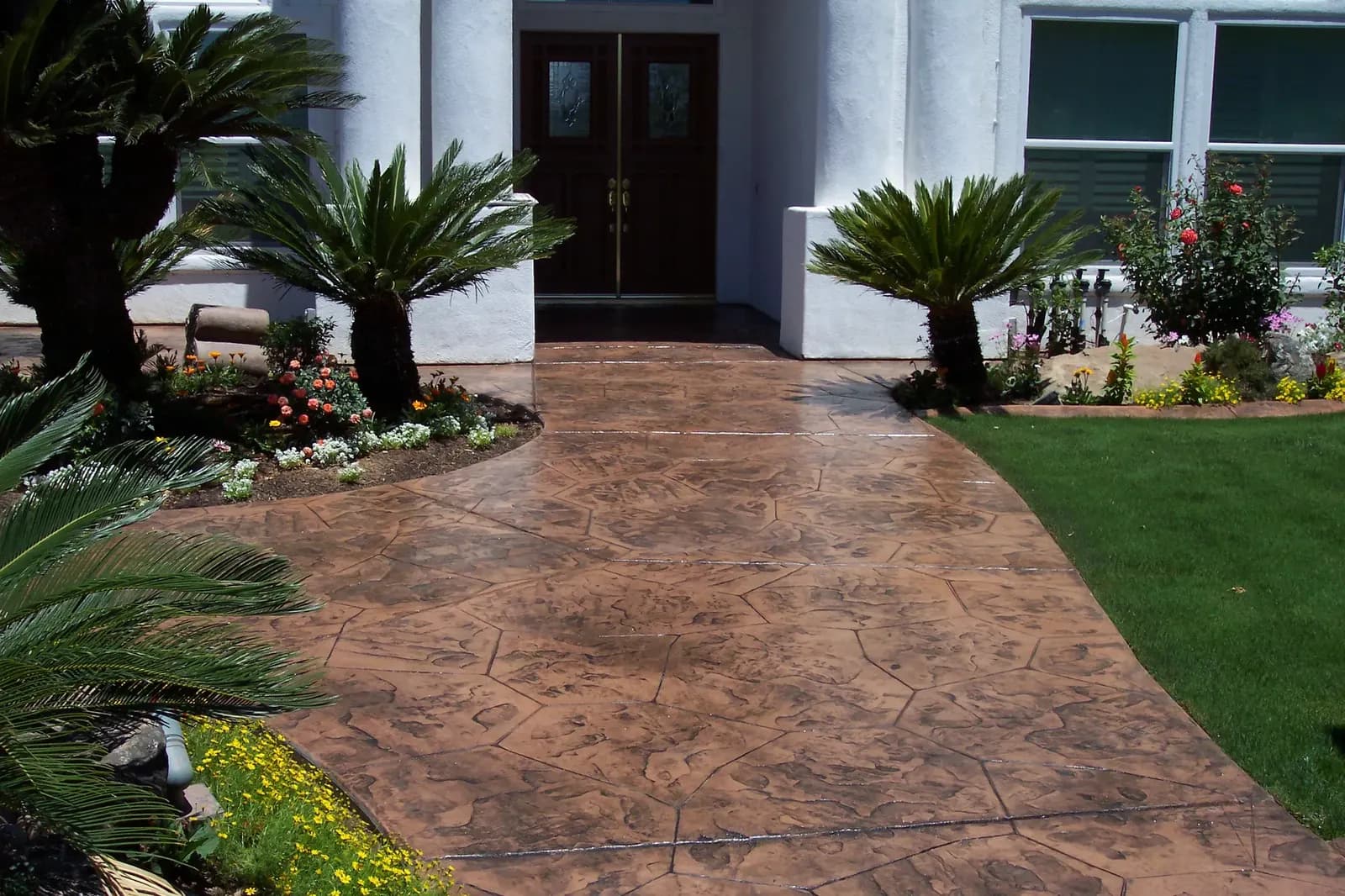
The honest answer on timing
Concrete can be poured in the Central Valley twelve months a year, and the day on the calendar matters far less than the hour the truck arrives and what the subgrade is doing. Spring and fall are the comfortable windows. Summer works fine when the crew starts early and the mix, the finishers and the water are all set up for heat. Winter works fine between storms, as long as the ground underneath is not saturated.
What we will not do is start a large pour at ten in the morning in August, because the concrete will be fighting us before the last truck empties. Timing is not a preference in this climate. It is part of the build, the same as base prep and joint layout, and it is one of the things a crew that has poured here since 1980 simply schedules around without being asked.
Concrete can be poured in the Central Valley twelve months a year, and the day on the calendar matters far less than the hour the truck arrives and what the subgrade is doing. Spring and fall are the comfortable windows. Summer works fine when the crew starts early and the mix, the finishers and the water are all set up for heat. Winter works fine between storms, as long as the ground underneath is not saturated.
What 105 degrees does to fresh concrete
Heat speeds up the chemical reaction that hardens concrete and pulls water off the surface at the same time, which is a bad combination. On a 105 degree afternoon in Fresno with any breeze at all, a slab can flash off, meaning the top surface stiffens while the concrete underneath is still soft. The finishers lose their window. You get a surface that is difficult to trowel evenly, and if it is worked while that crust is forming you can trap water under it and end up with a weak, dusty top layer.
Fast evaporation also shows up as plastic shrinkage cracking, the short random hairlines that appear on the surface within the first few hours. Those are surface tension cracks from the top drying faster than the body of the slab, not structural cracks, and the whole point of an early start and proper wet curing is to never give them the chance to form. Nothing about them is mysterious, and nothing about them is inevitable either, because they are a product of conditions a crew can plan around.
Valley wind makes it worse than the thermometer suggests. A 95 degree day with a steady breeze and low humidity can pull moisture off a slab faster than a still 105 degree day. We watch all three: temperature, wind and humidity. The batch plant knows it too, which is why the mix leaving the yard for a nine in the morning August pour in Fresno is not the mix we would order for a cool October afternoon in Reedley. Conditions on the day set the recipe.
- Surface flashes off before the slab is ready to finish
- Less working time to strike off, float and trowel
- Plastic shrinkage hairlines on the surface
- Lower long term strength if the slab dries instead of curing
Why the crew starts before dawn in August
In midsummer we are on site in the dark. Forms and steel are set the day before, the first truck is timed so placement begins as the sun comes up, and the goal is to have the slab placed, struck off and bull floated before the real heat arrives. Finishing then happens on a surface that is setting at a sane rate instead of one that is being cooked from above.
The other half of a hot weather pour is what goes into and onto the concrete. The mix can be adjusted with a retarder so it holds its working time. Trucks can be loaded with chilled water or ice on extreme days. Subgrade and forms get dampened so they are not drinking water out of the bottom of the slab. Evaporation retarder goes on between finishing passes, and curing compound or water curing starts as soon as the surface will take it.
This is also why a single day pour is normal for us on a typical patio, driveway or pool deck. Starting at first light gives a full working day inside reasonable temperatures. By the time most of the neighborhood is awake the concrete is placed and the finishers are working in their own shade. The crew is off site in the afternoon, the yard is cleared of debris, and you are not living around an open job through the hottest hours.
- Forms, base and steel set the day before so placement starts at sunrise
- Retarder in the mix and cool water in the truck on extreme days
- Subgrade and forms dampened before the concrete lands
- Evaporation retarder and shade for the finishers between passes
- Curing started the same day, not the next morning
Cold joints, and why a pour does not stop halfway
A cold joint happens when one load of concrete starts to set before the next load is placed against it, so the two never knit into one piece. The seam shows on the surface, it collects dirt, and it is a weak line where a crack will eventually open. In cool weather you have a comfortable margin. In valley heat that margin shrinks to a window you can lose to one late truck.
So scheduling is dispatch, not just weather. We size the crew to the pour, confirm truck spacing with the plant, and stage access so a mixer is not stuck behind a gate or a parked car while the slab already down is stiffening. If a truck is genuinely going to be late on a hot morning, the right answer is to pull the pour to another day rather than build a seam into your patio that you will be looking at for thirty years.
Want your yard priced?
Free estimate, we walk it with you.
Winter rain and what the subgrade is doing
Winter pours are good pours in the valley. Cool mornings give finishers a long working window and the concrete cures slowly, which it likes. The limit is not the air temperature, it is the ground. Once a yard in Fresno or Reedley has taken a week of rain, the subgrade is saturated, and saturated subgrade means you cannot compact it properly, equipment ruts it, and the slab ends up sitting on soft material that will settle later.
So after a real storm we wait, usually a couple of dry days for a well drained yard and longer where hardpan is holding water near the surface. We also protect fresh concrete from rain, because a downpour on a slab that has not taken its final set will damage the surface. On the rare valley night that threatens frost, a slab poured that day gets covered with blankets, since freezing water in fresh concrete does permanent damage to the top layer.
- Compaction is impossible on saturated subgrade, so the pour waits
- Fresh concrete gets covered if rain arrives inside the first hours
- Blankets on the rare frost night
- Trenching and drain work often happens in the wet window instead
When the forecast moves the schedule forward
Sometimes the weather argues for going sooner rather than later. A homeowner called us in February about roughly 380 square feet, and the ten day forecast showed rain across almost the whole following week. The owner came out the same day to look at the project and price it. The crew was on site the next morning, and the pour was placed, finished and cleaned up in under nine hours, ahead of the storm.
That is not a stunt, it is what being local and owning the concrete crew makes possible. We are not waiting on a subcontractor's calendar, so when a window opens we can take it. The same flexibility works in the other direction: if the right call is to hold a week so your yard dries out, we will tell you that and put you back on the schedule rather than pour into conditions that guarantee a callback.
The easy seasons, and planning your project around them
March through May and late September through November are the two windows where almost everything is straightforward, and they are the busiest months for good reason. If you want to be sitting on a new patio for the Fourth of July, the estimate conversation belongs in March, not in June. If you want a pool deck ready before next summer, autumn is the quiet, comfortable time to build it. Book early either way, because those same windows are when everyone else in Fresno and Clovis wants their backyard built.
The concrete gets batched for the conditions on the day it goes down. When you book matters mostly because it decides which set of conditions we are working in, and we would rather schedule you into the good ones. Whatever the calendar says, the pour itself gets planned around the forecast for the week we are actually on your site.
- Spring and fall: the widest finishing windows and the fastest schedules
- Summer: early starts, hot weather mix, single day pours
- Winter: excellent curing weather between storms, subgrade permitting
- Book roughly a season ahead of the date you want to use the yard
Questions we get about this
The follow ups this subject raises once somebody starts pricing it for real.
Is it ever too hot to pour concrete in Fresno?
It is rarely too hot for the whole day, but it is often too hot for the afternoon. We move placement to first light, adjust the mix with a retarder, use cooler water, dampen the subgrade and start curing immediately. On an extreme heat day with strong wind we would rather move the pour than hand you a surface that was finished while it was flashing off.
How long after rain can you pour my patio?
It depends on how much water the yard took and where the hardpan sits. A well drained lot often needs a couple of dry days. A yard holding water on top of the pan can need a week or more, because the subgrade has to be dry enough to compact properly. We check it on site rather than guessing from the forecast, and we will tell you straight if it needs longer.
Can you finish a patio or driveway in one day?
Usually, yes. A typical residential patio, driveway or pool deck pour is a single day once forms, base and steel are prepared. One 380 square foot job was placed, finished and cleaned up in under nine hours ahead of a forecast storm. Larger backyard remodels with walls, turf, shade structures and a kitchen run longer, and you get that schedule with the estimate.
Salas Outdoor
Written by the crew that does the work. Family owned since 1980, backyard remodeling and concrete across Fresno, Clovis and the Central Valley.